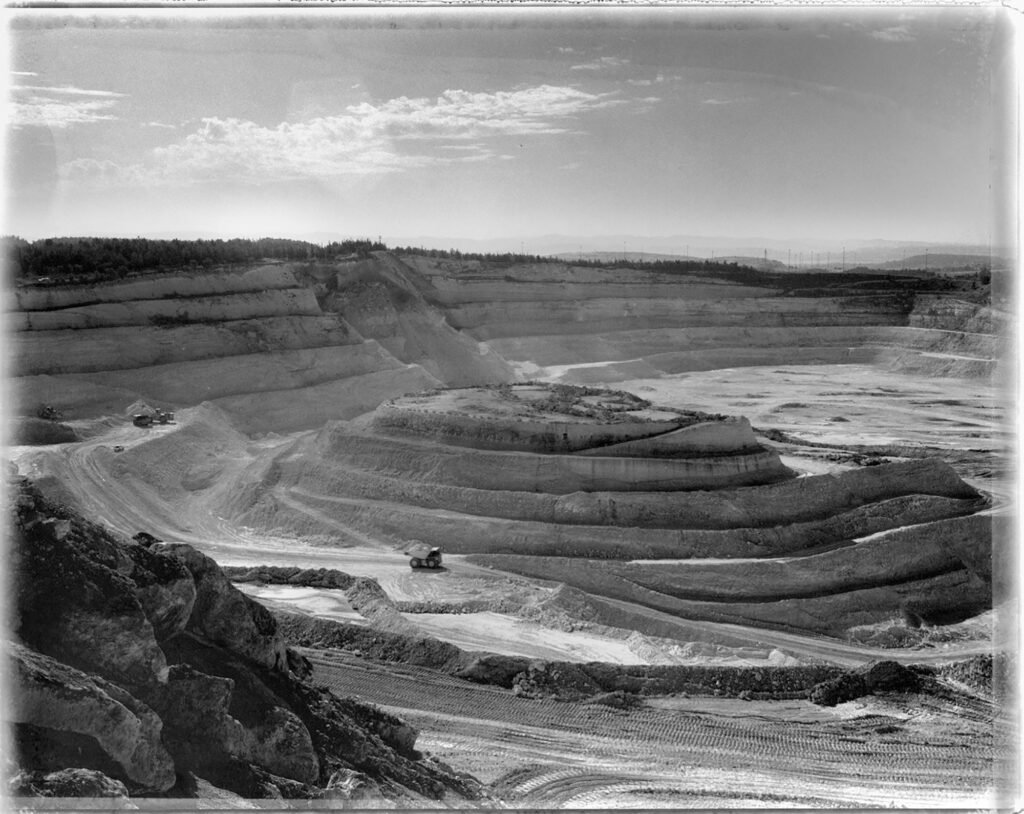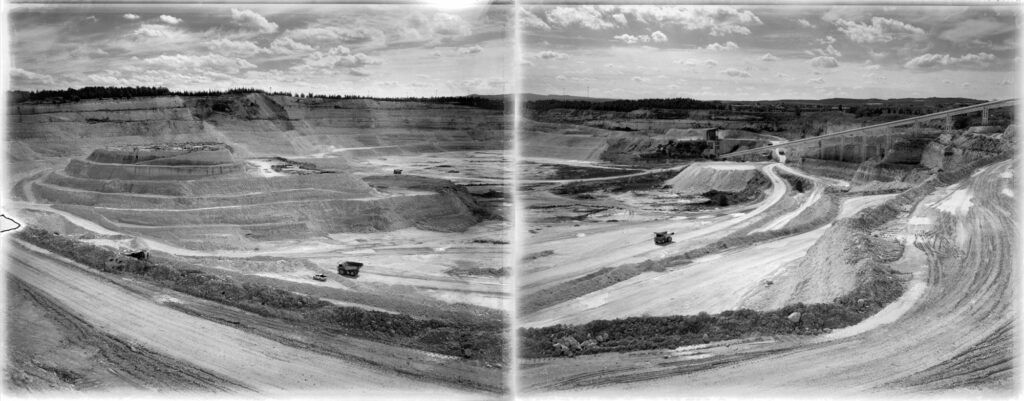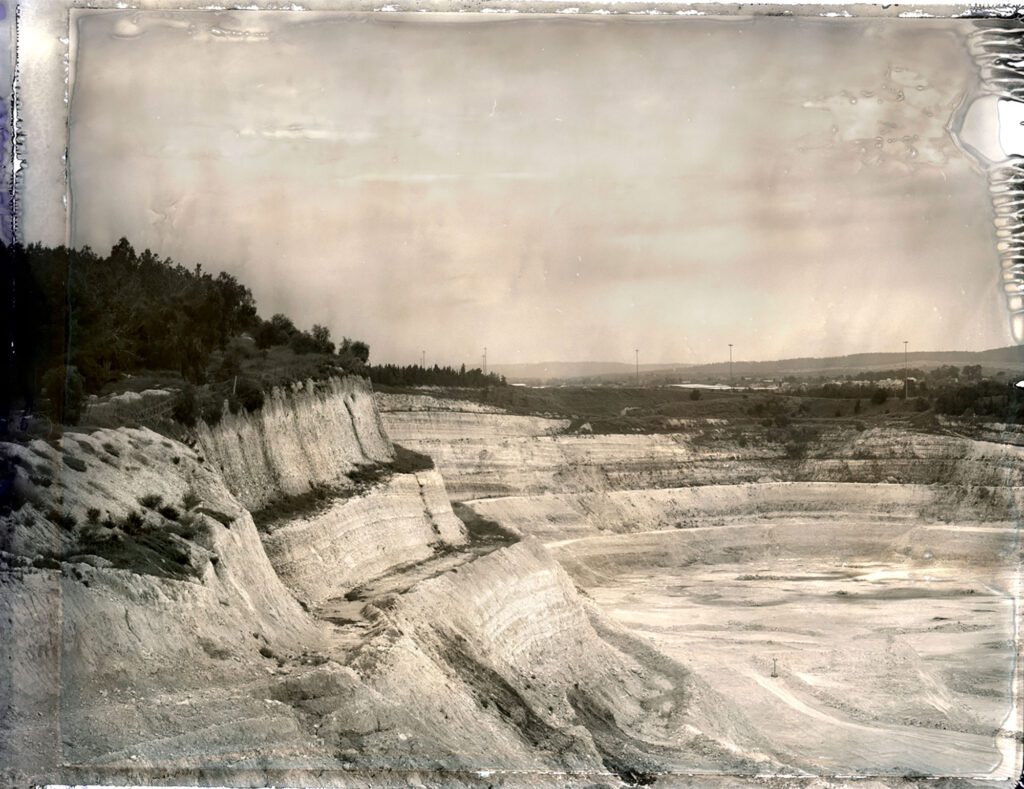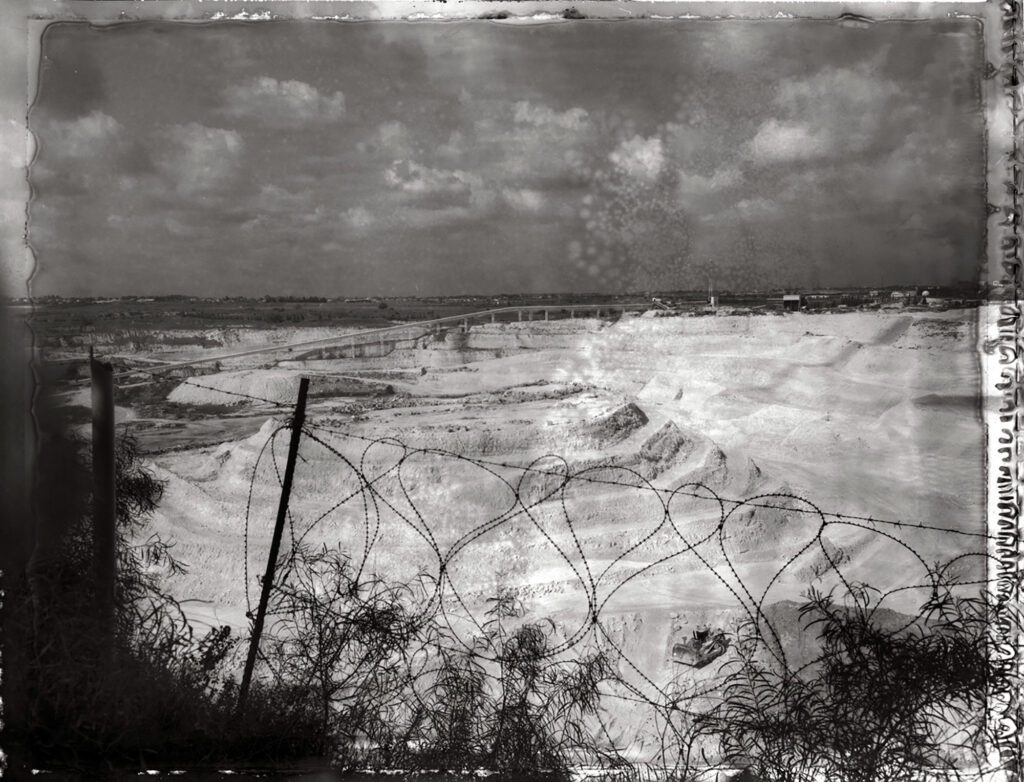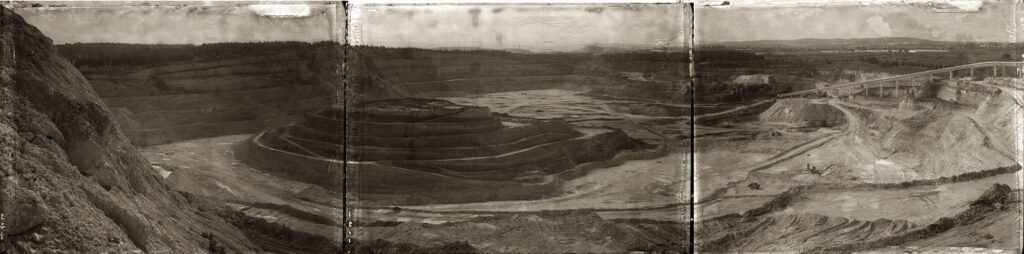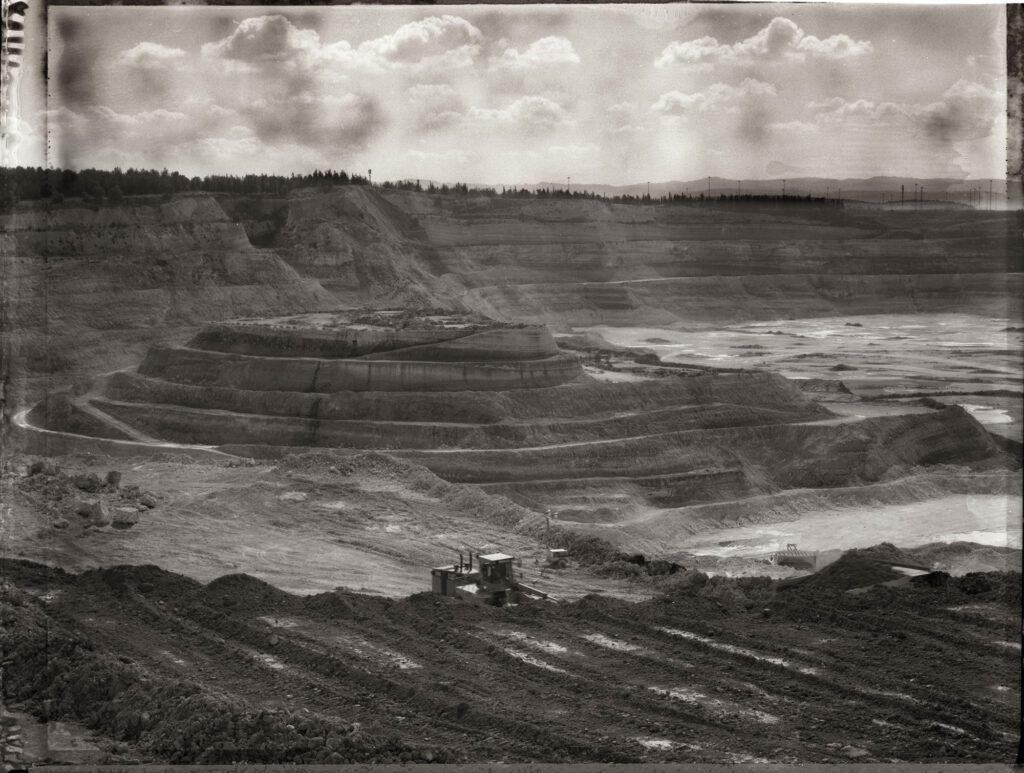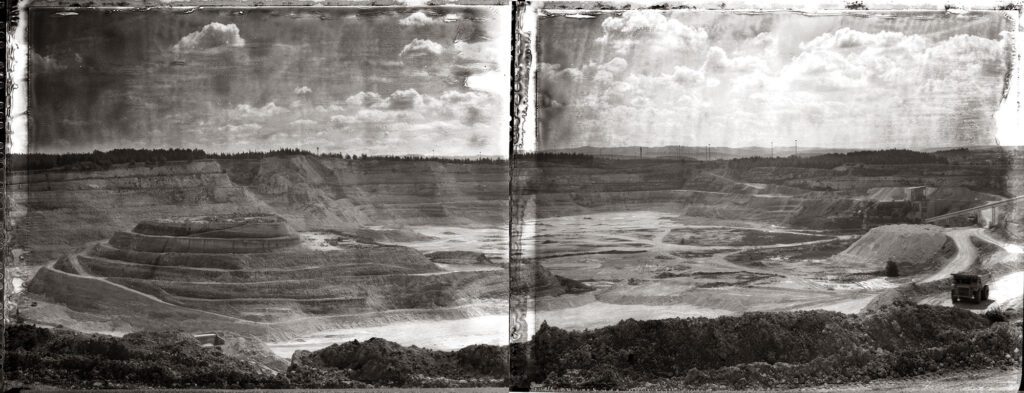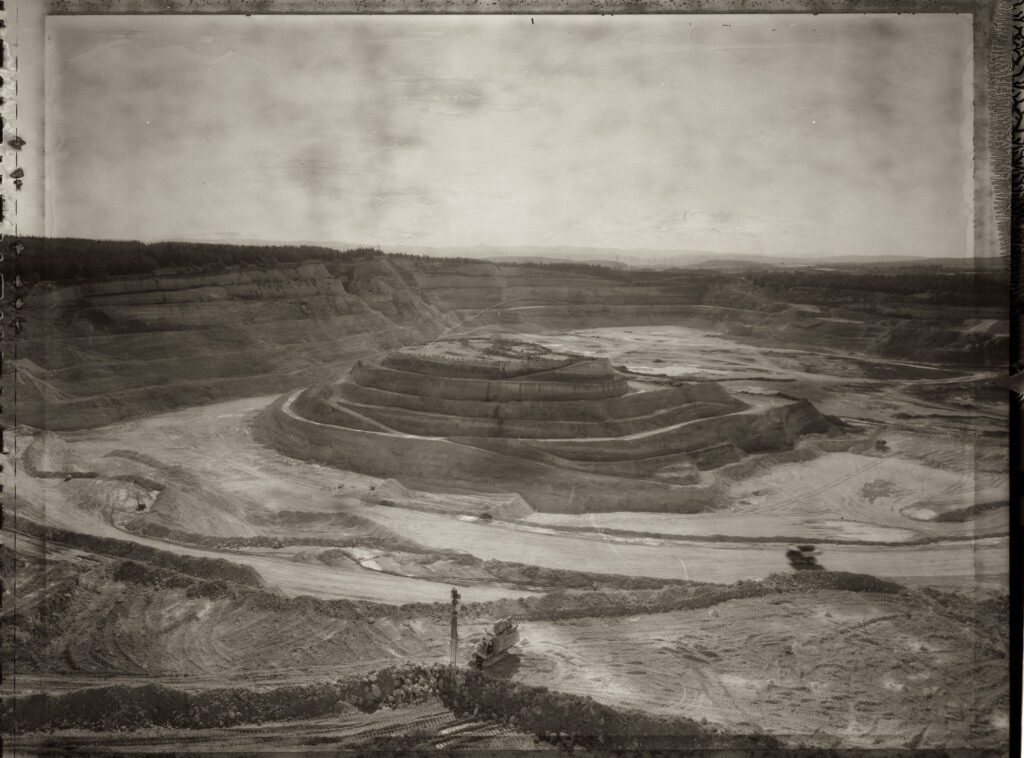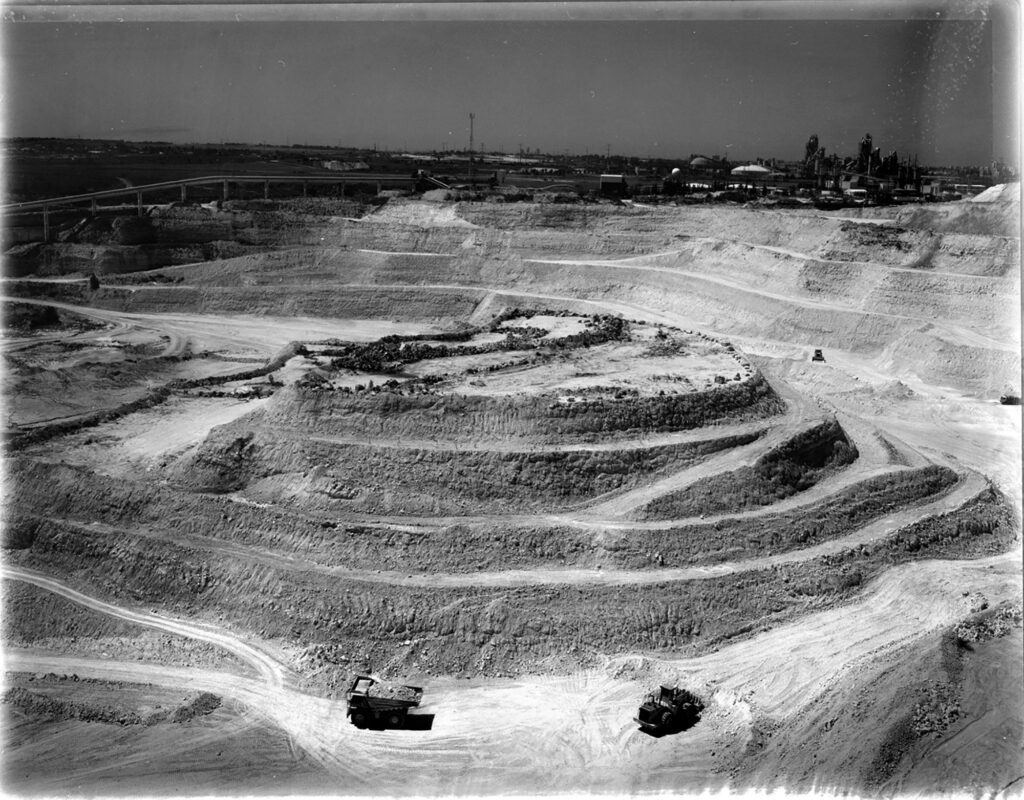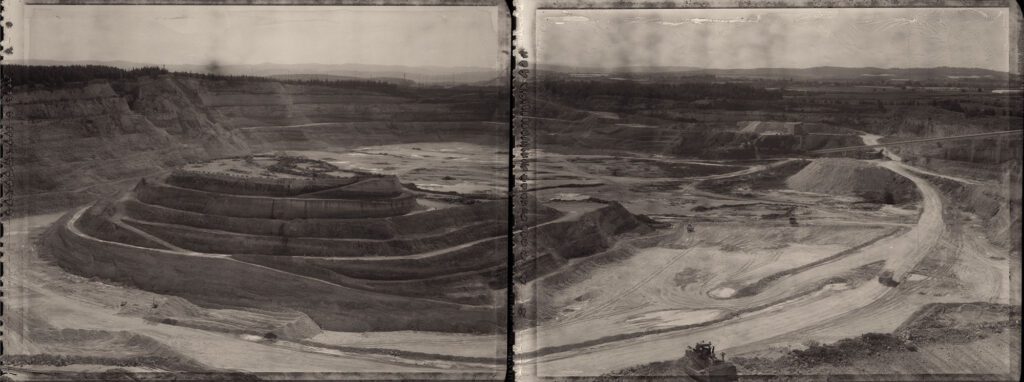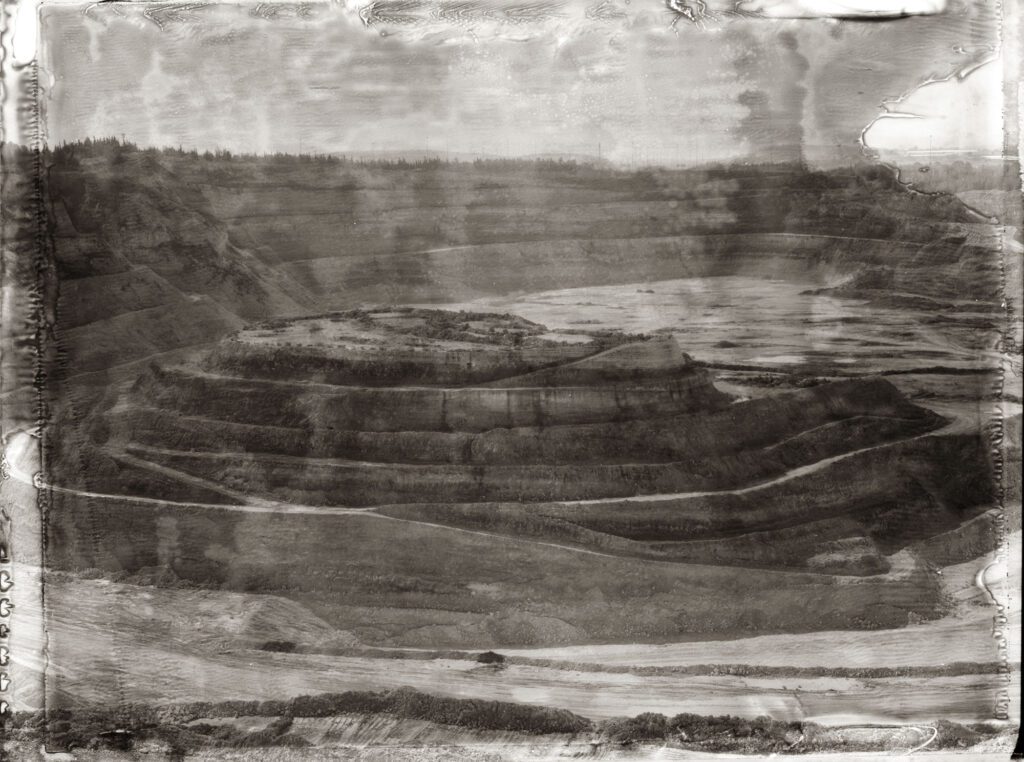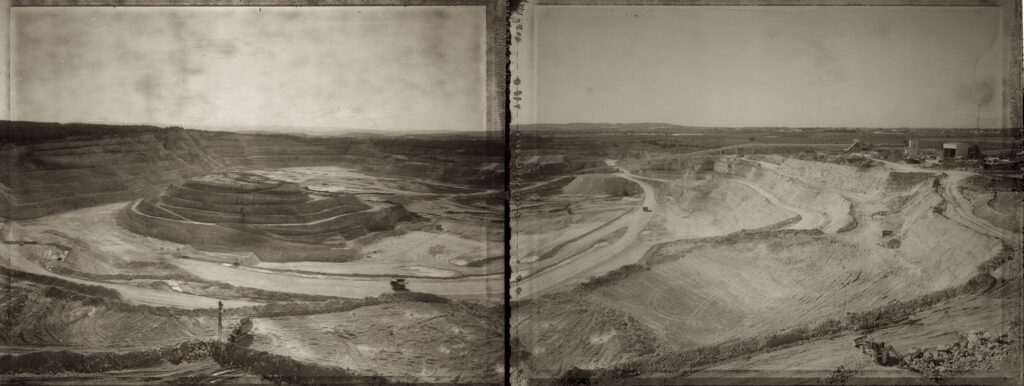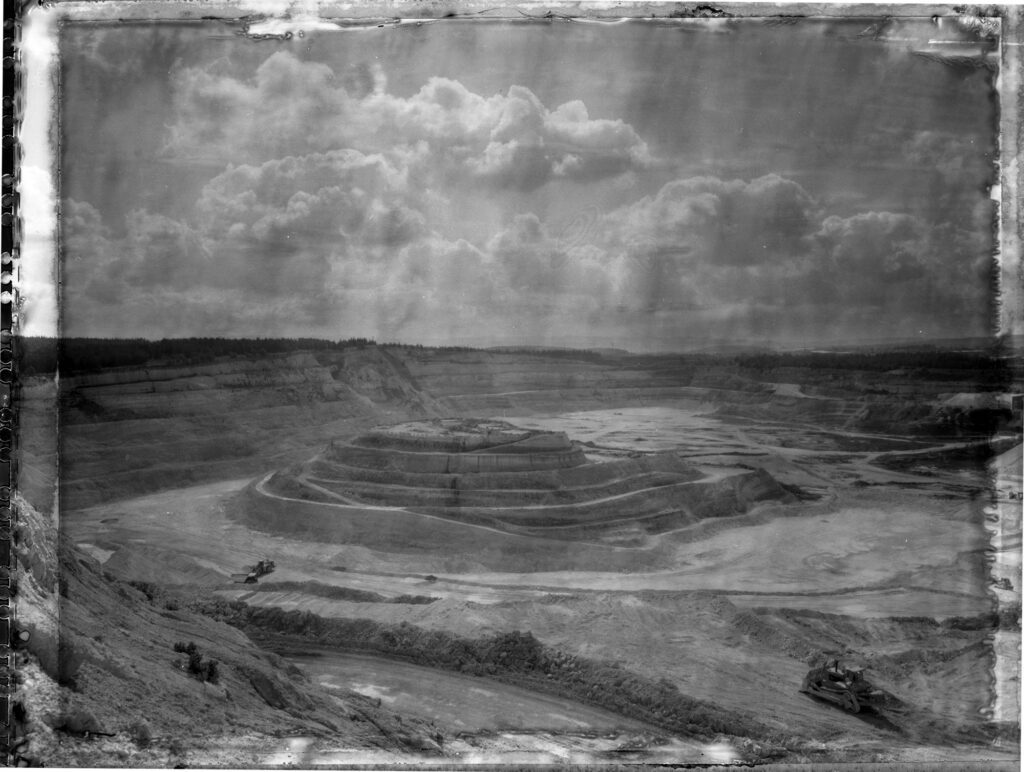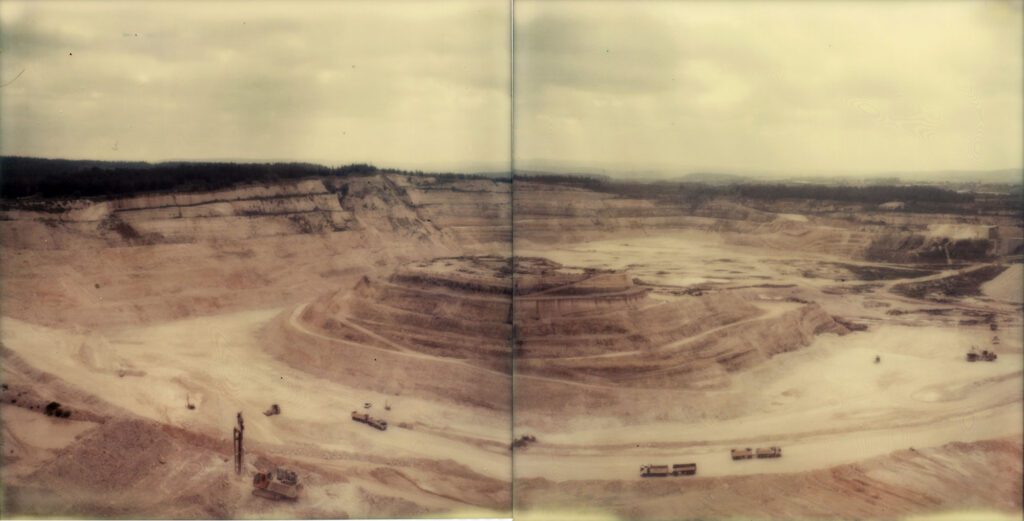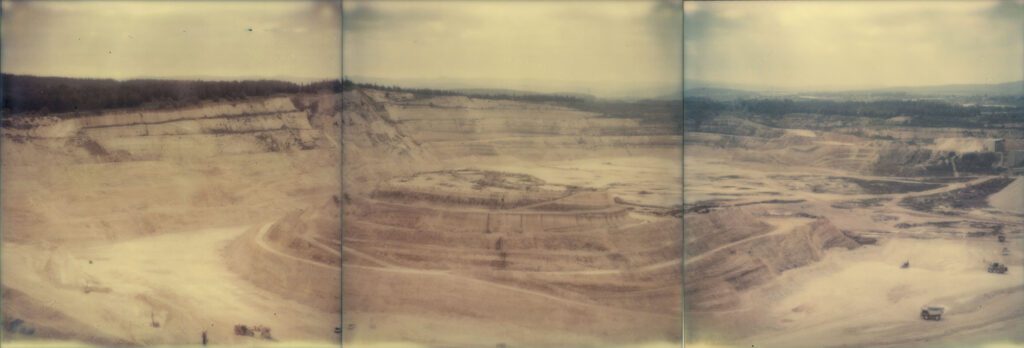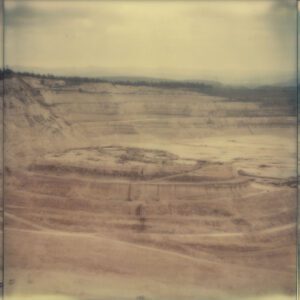
The Nesher quarry near Ramla, Israel, has been extracting limestone for cement production for several decades. In 2006, a bulldozer accidentally broke through a shaft leading to an underground cave, where eight species of blind invertebrates found nowhere else on Earth were discovered in its subterranean lake. The factory is forced to excavate around the cave without touching it, resulting in a terraced formation at the center of the crater that resembles a ziggurat.
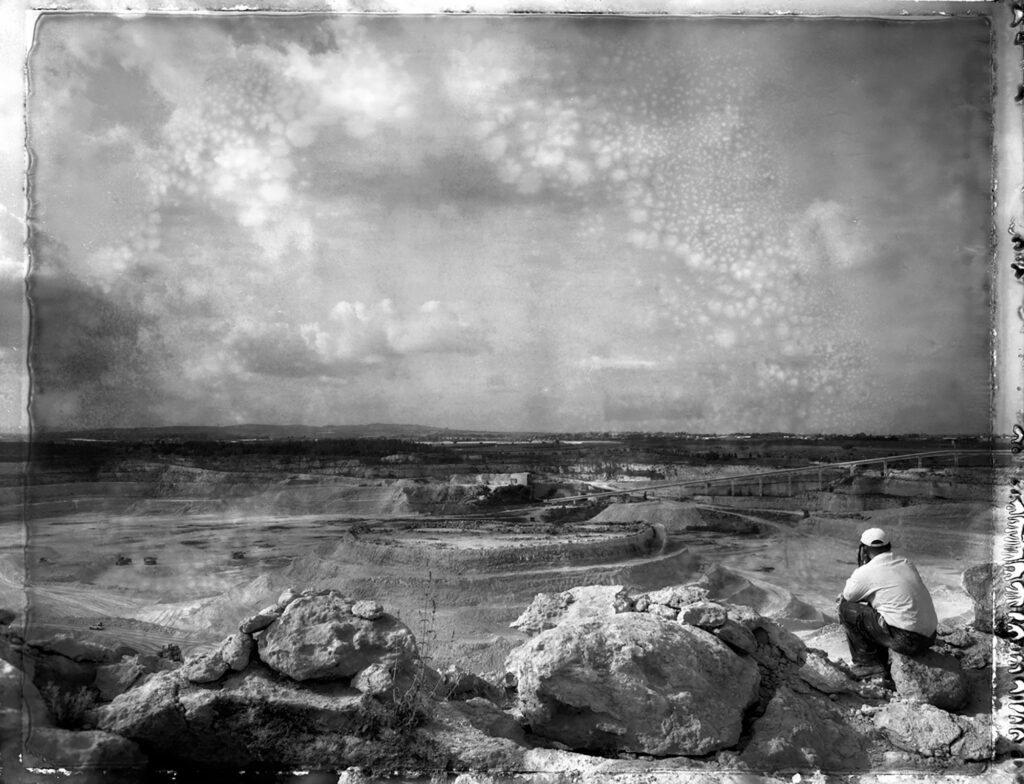
It was upon learning of this paradox (life preserved within destruction) that we began photographing. Over many years we returned to the quarry from different sides, in different seasons, in different light and weather, documenting the transformation of the landscape and the shifting silhouette of the ziggurat as the excavation deepened.
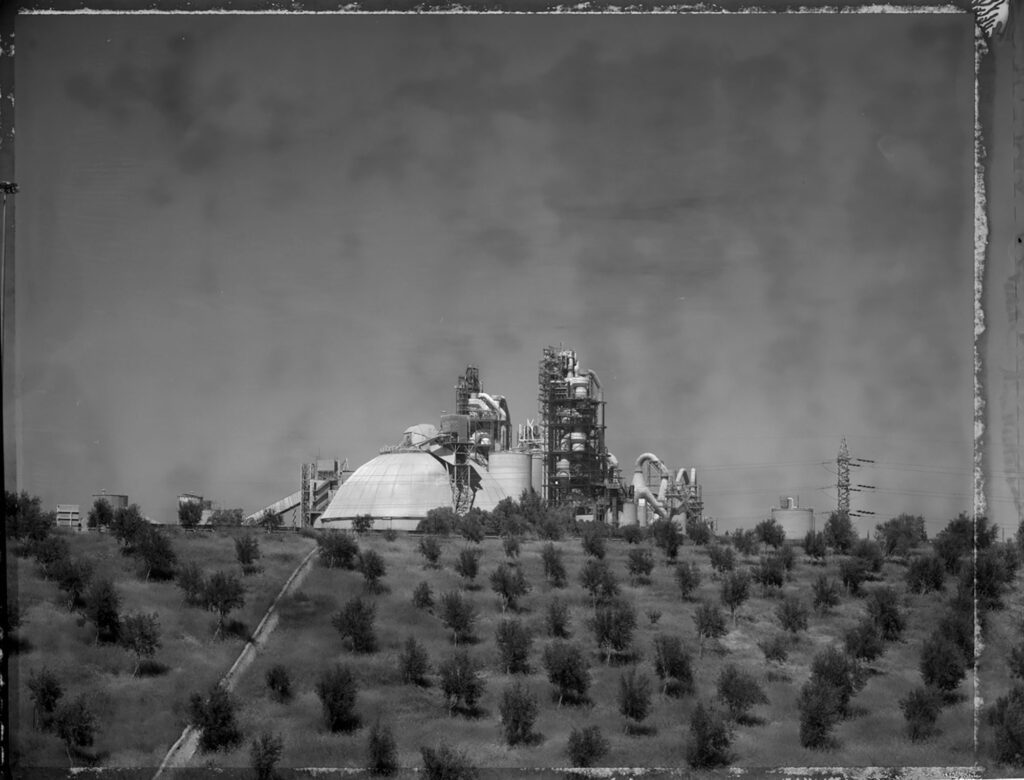
The series was shot on expired Polaroid Type 55, 665 and SX-70 film. Type 55 and 665 were discontinued in 2006, the same year the cave was discovered. The negatives carry the marks of time: chemical damage, unpredictable emulsion reactions. The medium and the place speak of the same thing: what disappears, and what somehow survives.
The title references Hokusai's "Thirty-Six Views of Mount Fuji," a years-long observation of a single subject from different vantage points and across different times.